
The sea rarely stays the same for long. A calm morning can turn grey within an hour, and a familiar stretch of coast may look entirely different when the sun drops behind a cloud. Claude Monet understood this instability. Throughout his career, he returned to the water, painting harbors, beaches, cliffs and open horizons in changing conditions.
Some of his seascapes are quiet and almost still. Others seem to move before our eyes. A dark sky presses down on the water in one painting, while another is filled with the soft colors of evening. Monet's interest was not simply in recording the appearance of the sea. He wanted to understand how light altered what he saw, and how quickly a landscape could become something else.
His Monet seascape paintings are especially revealing in this respect. They show an artist working with a subject that refuses to hold still. The waves shift, the clouds gather and the light travels across the surface. A few strokes of paint can suggest a change in weather that would be difficult to describe in words.
A sea that keeps moving
Monet's relationship with the coast began early. He grew up in Le Havre, a port city in Normandy, and spent much of his career returning to the French coastline. He painted at places such as Sainte-Adresse, Trouville, Pourville, Dieppe and Etretat. These locations offered more than attractive scenery. They gave him different kinds of light, different arrangements of land and water, and an endless supply of changing conditions.
The sea also suited his way of working. Rather than treating a landscape as a fixed arrangement of objects, Monet looked closely at what happened from one moment to the next. A wave might reflect the sky, then break into white foam. A cliff could appear dark against the afternoon sun and almost disappear into haze by evening.
There is no single formula for his seascapes. Some paintings depend on a strong horizon and a broad division between sea and sky. Others bring the viewer closer to the shore, where rocks, sand and water occupy much of the picture. In each case, the weather affects the entire composition.
The result is a kind of visual uncertainty. We recognize the coast, but we also feel that its appearance is temporary.
Calm water and distance
A quiet sea can be difficult to paint. There may be very little movement to describe, and the horizon can seem almost empty. Monet found ways to make these restrained scenes hold our attention through subtle changes in color and tone.
In Sunset at Pourville, Open Sea, the open water extends toward the horizon beneath a sky touched by the last light of the day. The subject is simple, but the effect depends on the relationship between the distant line of the sea and the colors spread across the surface. Warm tones near the horizon meet cooler passages of water, creating a sense of depth without the need for sharply defined details.
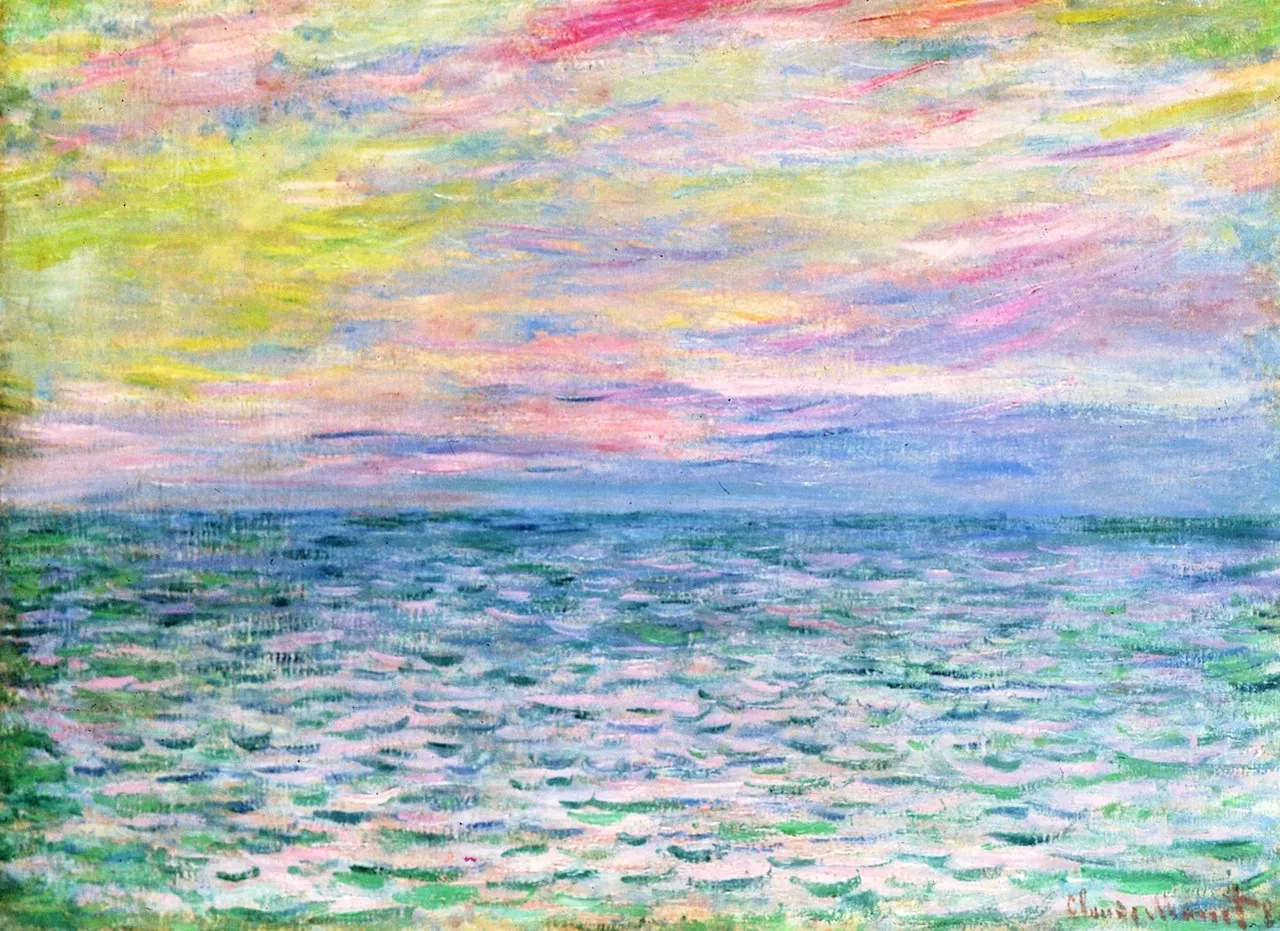
The painting asks us to look slowly. The sea is not described through individual waves or carefully drawn objects. Instead, the surface is built from patches of color that suggest a broad, changing expanse. The farther the eye travels, the more the water and sky seem to approach one another.
This is one of the quiet strengths of Monet's sea paintings. Distance does not mean emptiness. A low horizon, a few tonal shifts and a suggestion of reflected light can be enough to give the scene a strong presence.
When the weather turns
Storms offer a different challenge. The sea becomes more active, the sky grows heavier and the surface breaks into irregular shapes. Monet's A Stormy Sea brings attention to this unsettled relationship between water and sky.
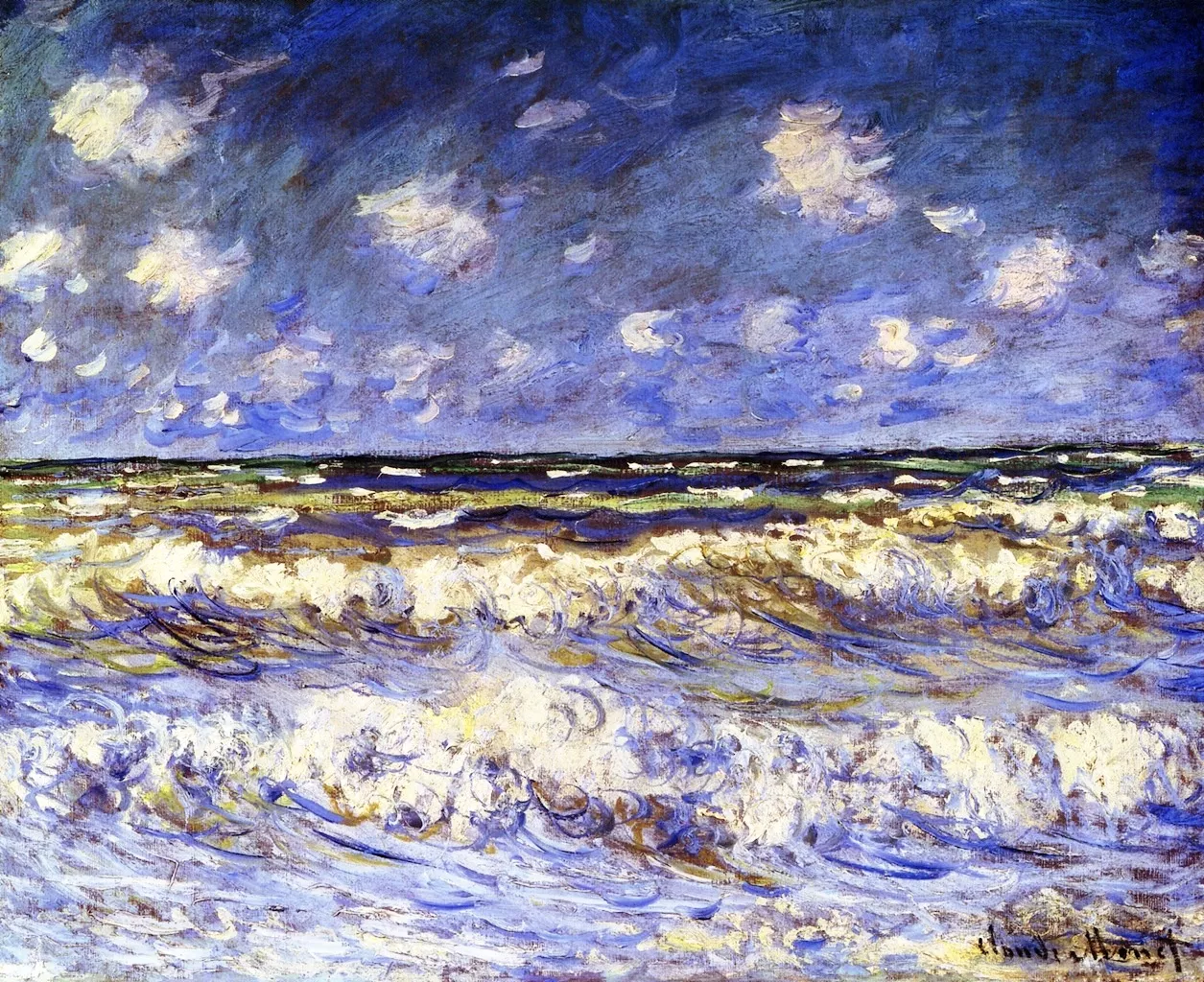
The painting's subject is immediately recognizable. The sea is rough, and the atmosphere feels charged. Yet the effect does not depend on a detailed account of every wave. Monet uses the direction and density of his brushwork to suggest movement. The surface of the water is divided into passages that appear to rise, break and recede.
The sky matters just as much. A storm is not only a collection of dark clouds. It changes the color of the sea, reduces the clarity of distant forms and alters the amount of light reaching the shore. Monet allows these effects to work together. The weather becomes something that shapes the whole scene.
Look closely at the difference between a calm horizon and a stormy one. In a quiet painting, the eye may rest along a nearly uninterrupted line. In a storm, that line becomes less secure. The sea seems to push upward, and the sky feels closer to the water.
There is drama here, but it is not theatrical. Monet's interest remains in the physical appearance of the landscape and the way paint can suggest its movement.
Cliffs above the water
The coast is not only sea. It is also the meeting point between water and land, where cliffs, paths and beaches give the eye a firm place to begin. Monet often used these features to organize his compositions.
In The Cliff Walk, Pourville, the coastal path provides a strong sense of direction. The viewer looks across the landscape toward the sea, while the cliff and the land above it establish the foreground. The water is part of a larger setting rather than the only subject.

This arrangement changes the experience of the weather. A person standing on a cliff does not see the sea in the same way as someone looking from a boat or from the beach. The height of the viewpoint reveals the shape of the coastline, the distance between the shore and the horizon, and the way light moves across the water.
Monet's coastal scenes often depend on this relationship between solid ground and shifting atmosphere. The cliff gives the composition structure. The sea introduces movement. The sky determines much of the mood.
At Pourville, the coastline could appear peaceful under a clear sky or more severe when clouds gathered over the water. The same landscape offered many possibilities, and Monet returned to such places because their appearance was never entirely settled.
The colors of evening
Sunset changes the sea in ways that are easy to recognize but difficult to describe precisely. The water may take on shades of pink, orange, violet or grey, depending on the clouds and the position of the sun. Reflections stretch across the surface, and the distinction between sky and water becomes less clear.
Monet's Sunset at Etretat is an example of his interest in the Normandy coast at the end of the day. Etretat was known for its dramatic cliffs and rock formations, but Monet was equally attentive to the light that changed their appearance.
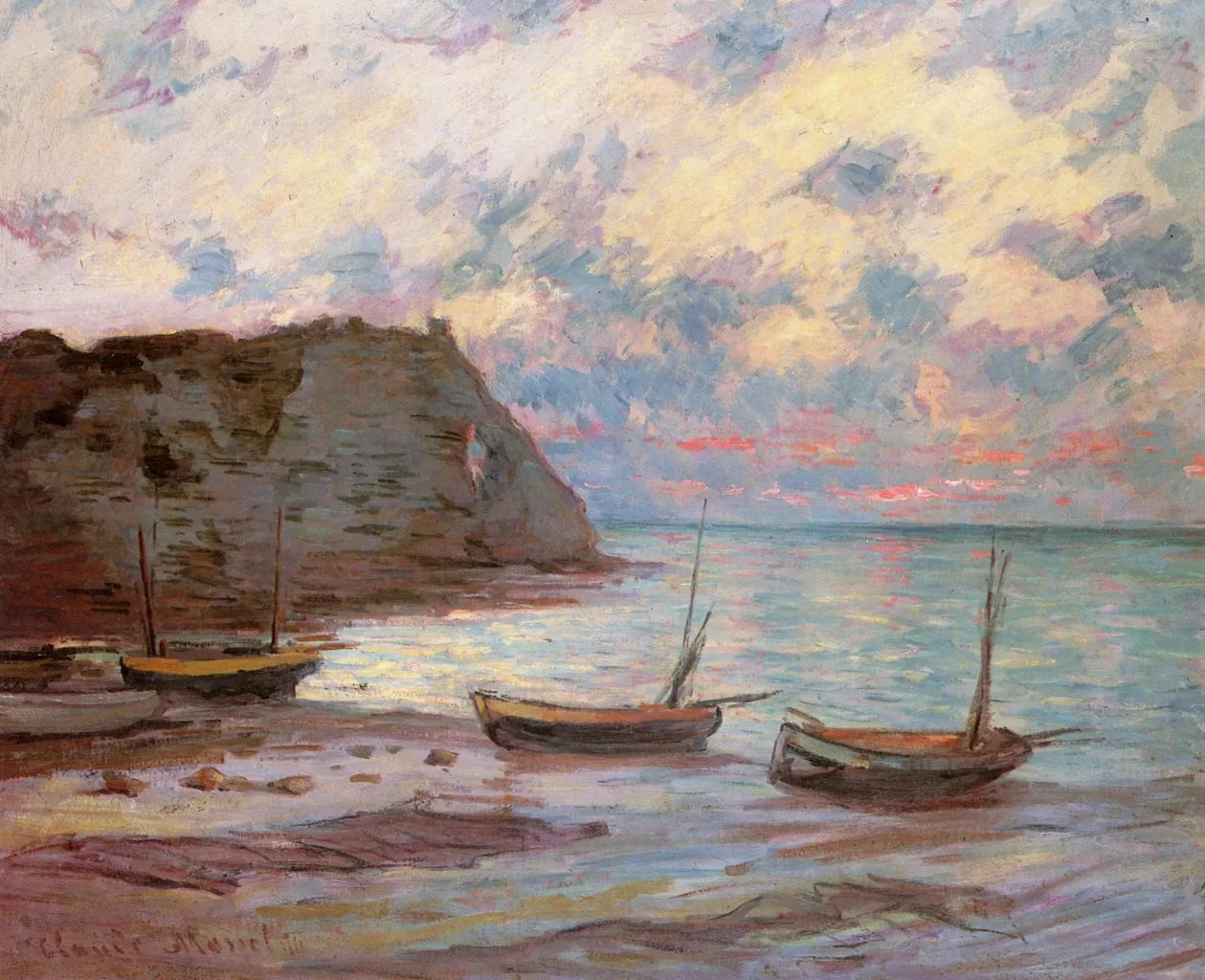
The cliffs can act as a dark or warm shape against the sky, while the sea carries the colors of the setting sun. Rather than treating each part of the scene as a separate object, Monet allows the colors to influence one another. The atmosphere connects the landscape.
This is where his brushwork becomes important. Short, visible strokes can remain distinct when viewed closely, yet they begin to work together at a distance. A patch of orange may suggest reflected sunlight. A cooler mark beside it can give the water depth. A darker passage may indicate a change in the weather or the shadow of a cloud.
Nothing needs to be outlined heavily. The viewer understands the scene through the arrangement of color.
A different kind of night
Evening light does not always lead to a warm sunset. Sometimes the sea becomes dark, and the atmosphere takes on a cooler, more uncertain character. Monet explored this mood in Seascape, Night Effect.
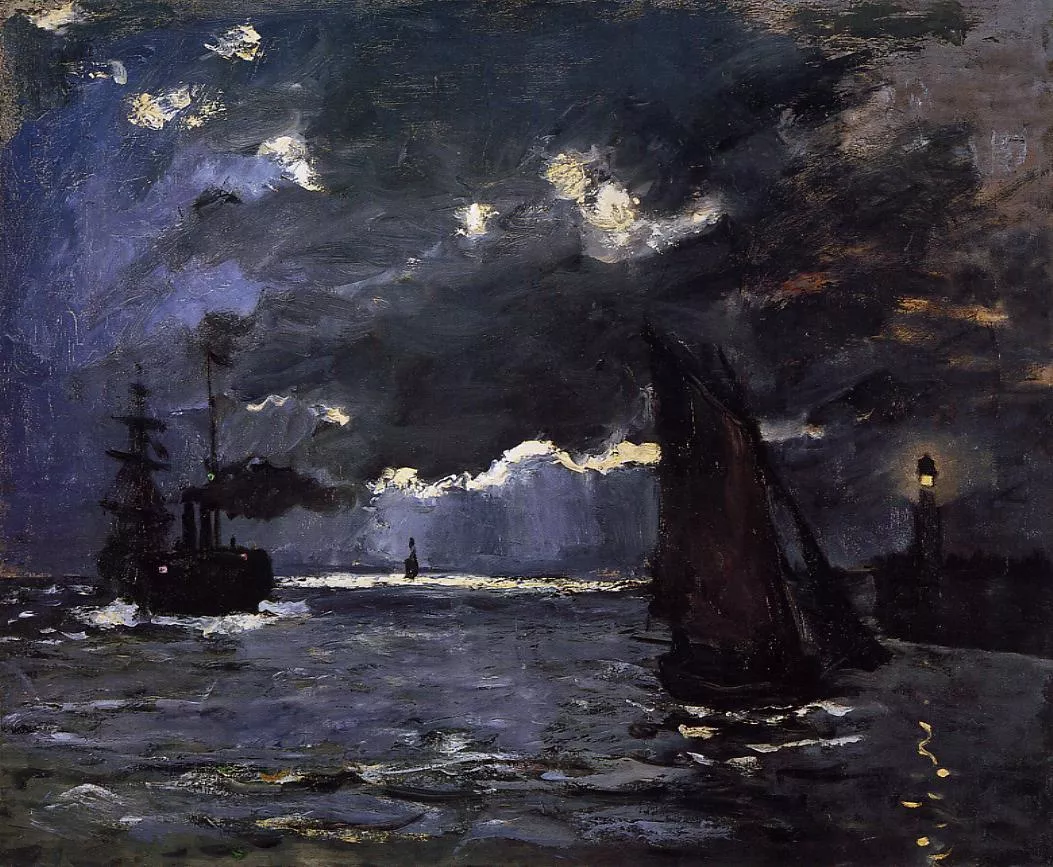
The painting shifts attention away from the brightness of the daytime landscape. The water and sky appear subdued, and the limited light makes the surface harder to read. Forms become less definite. The sea is still recognizable, but it is no longer presented as a clearly separated collection of waves, clouds and distant land.
This is one of the more interesting qualities of Monet's seascapes. He could make a familiar subject feel unfamiliar simply by changing the time of day. The same water that appears open and bright in the afternoon can become deep and mysterious at dusk.
The effect is not produced by darkness alone. Subtle differences between neighboring tones allow the eye to discover the surface gradually. The painting asks us to notice what remains visible when the light begins to fade.
Monet's interest in weather was closely connected to this attention to time. A seascape is never only a place. It is a place under particular conditions, seen at a particular moment.
Looking at the sea
The variety of Monet's seascapes makes it difficult to think of his coastal paintings as a single style or mood. A stormy sea, a distant horizon and a sunset over the cliffs require different arrangements of paint. What connects them is his close attention to the relationship between light, atmosphere and the physical world.
He did not need to describe every detail of a wave to make the water believable. A few carefully placed strokes could suggest its direction, while a change in color could tell us whether the air was clear or heavy with moisture. The viewer completes much of the scene.
That is why these paintings remain compelling. The weather in them is not fixed. It seems to be moving through the landscape, changing the sea as we look at it. A quiet horizon can become unsettled, a cliff can lose its sharpness and a familiar coastline can take on a new character.
Monet's seascapes remind us that looking at the sea is never quite the same experience twice. The water may be unchanged, but the light is not. And sometimes, that small difference is enough to make an entire painting feel new.